



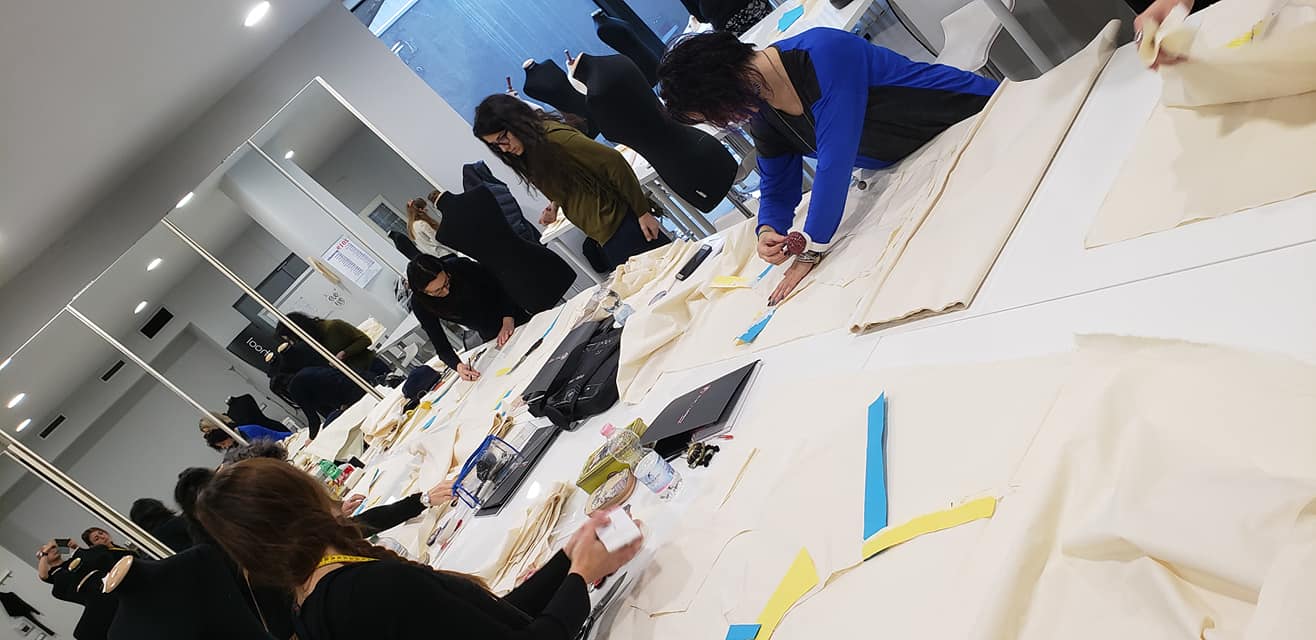
Handcrafted tailoring and sustainable development
The role of craft tailoring in the process of sustainable development
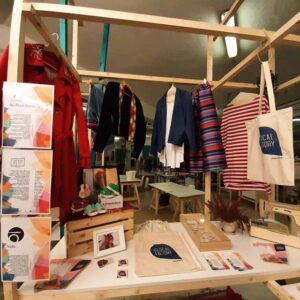
Is it possible to think about a sustainable development in the fashion world?
Today I would like to return to a topic that is very dear to me: sustainability in the world of fashion and the role of artisan companies.
Operating in a highly competitive environment such as that of fashion and doing so in an ethical manner can, in fact, be a very complex but not impossible undertaking.
For so many years now, as we chase after fast fashion, whose products, due to the frenetic succession of collections, quickly become obsolete, we have lost sight of the importance of the attention due to sustainable development processes.
Giorgio Armani himself, who has always been attentive to sustainability, has affirmed the need to “slow down” a phenomenon that very much reflects too fast consumption.
In the new dramatic reality brought about by the pandemic, where time has expanded and rhythms have slowed down drastically, we have been induced to reflect on everything that surrounds us: we have begun to reconsider the environment and its protection, human, social and economic aspects.
Our security has been undermined, forcing us to forcibly modify our lifestyles. We are beginning to wonder how fashion could play a significant role in this particular moment and how it could change its production methods and become “sustainable fashion”, more attentive to social and environmental issues.
The artisan fashion company, in the process of sustainable development, assumes a very important role as the bearer of those values that refer to the application of sustainable product life cycles.
A return to quality, especially the quality of fabrics and yarns, possibly in natural fibers and colors because they are less polluting and more durable, reduces waste; the return to manual skills and individual creativity can also be a viable market alternative for a consumer who will necessarily change many of his behaviors and begin to move towards consumption models that are conscious, inclusive and circular.
The creation of something unique and exclusive, interpreting and sometimes anticipating the needs and desires of the customer with products and services that are characterized by quality, while respecting their identity, makes possible a healthy and stimulating market competition. macos/deepLFree.translatedWithDeepL.text
What are the advantages of a custom handcrafted product?
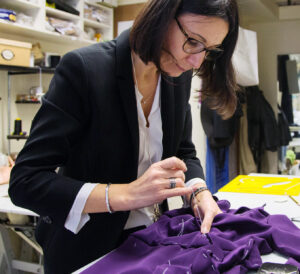
Bespoke tailoring has a higher production cost than any industrial product because two elements affect the price of the product: the time of implementation and uniqueness.
On the other hand, a bespoke suit enhances the style, physique and personal taste; it is made according to precise anatomical measurements and the uniqueness, also resulting from the “imperfection” of human workmanship, makes the handmade product exclusive; with high quality materials, chosen by the customer, it can last a lifetime. It also offers the possibility to customize most of the characteristics of the details that characterize the dress and the style of the garment.
Thanks to new technologies and the advent of the internet today you can also make a tailored garment online, customizing it by taking your measurements directly from home.
What is the possible future of production in the fashion world?
The near future offers the possibility of relaunching a slower, more local way of producing, but which at the same time will have to apply the possibilities offered by new technologies in creative terms. These changes will be more incisive and richer in prospects if they are supported by the spirit of collaboration between companies in the sector for a sharing of resources that eliminates waste and encourages sustainability.
This trend, which has been underway for some time, will need to ensure that the principle of collaboration, to the benefit of all, prevails over the exaggerated spirit of competitiveness, enabling companies to cope more effectively with the current severe financial and production difficulties.
Efforts should be concentrated on researching and defining a style of their own, and then focusing on maintaining this style and affirming the values that distinguish it.
Comments are closed